You know that sinking feeling when a bag you bought eighteen months ago starts showing its true colours? The strap pulls away from its anchor point. The edge coating flakes off in little curls. The zip housing, which felt solid enough in the shop, begins to crack along the seam. It’s not just annoying, it’s expensive, wasteful, and it leaves you right back at the beginning, standing in front of another display of bags that will probably do the same thing in another year.
Now think about someone who’s been carrying the same leather holdall for fourteen years. It’s scuffed in exactly the right places. The handles have darkened from use. The body has developed a depth of colour that no brand-new bag could fake. It doesn’t just look good, it looks earned. That gap between the bag that failed and the bag that flourished isn’t luck or brand loyalty. It’s craft: specific material choices, specific construction decisions, made by specific people who understand what they’re building.
So why do handcrafted leather bags last longer than their mass-produced counterparts? It comes down to five factors: leather grade, stitching method, tanning process, construction details, and care. At Two Fat Dogs, we make every bag in our own on-site workshop, and these aren’t abstract considerations for us. They’re decisions we make by hand, every single day. Understanding them will help you shop smarter and care better for whatever you already own.
The leather grade that sets the ceiling on your bag’s lifespan
Not all leather is the same material, and this is where most buying decisions go wrong. The word “leather” covers an enormous range of products, from heirloom-grade full-grain hides to reconstituted scraps held together with bonding agents. The grade you start with sets an absolute ceiling on how long the bag can last, regardless of how well you care for it.
What the different grades actually mean in practice
Full-grain leather keeps the hide’s natural outer surface completely intact. That outermost fibre layer is the densest and strongest part of the hide, and preserving it means preserving the material’s natural resistance to abrasion, tearing, and long-term wear. Top-grain leather is sanded or buffed for a more uniform finish, which removes some of that surface strength but still produces a durable, long-lasting result. Corrected-grain leather is processed more heavily to hide blemishes, often embossed with an artificial pattern, and tends to age less gracefully. Bonded leather, at the bottom of the hierarchy, is made from shredded leather scraps reconstituted with adhesive binders. It looks like leather, but it behaves like a composite, and it shows: peeling, layer separation, and surface cracking typically appear within one to three years, sometimes sooner.
The lifespan gap is significant. A well-maintained full-grain bag can last twenty to thirty years, and often longer. A bonded leather bag in the same conditions might last eighteen months before it starts to delaminate. That’s roughly five to ten times the usable life, at minimum. This is a core part of why handcrafted leather bags last longer: makers who care about longevity simply won’t work with anything below top-grain.
Why “genuine leather” tells you almost nothing useful
The label “genuine leather” sounds reassuring, but it’s technically accurate for corrected-grain and bonded products as well as full-grain ones. It tells you the bag contains leather in some form. It tells you nothing about grade, fibre integrity, or longevity. When you’re evaluating a bag, look for natural surface markings: slight variations in texture, subtle colour shifts, the occasional small scar or grain pattern that no two hides share. A perfectly uniform surface with no variation is usually a sign the hide has been heavily processed, or that the leather isn’t what it’s claimed to be. Ask directly: what grade of leather is this, and where does it come from?
Why do handcrafted leather bags last longer? Stitching is a big part of the answer
The stitch holding your bag together is doing a quiet, constant job. Every time you lift the handles, swing the strap, or pack it heavier than you should, those seams absorb force. The method used to create them determines how they respond to that force over years of use, and the difference between the two main approaches is more significant than most people realise.
How saddle-stitching holds even when a thread breaks
Saddle-stitching uses two needles and a single continuous thread, with each needle passing through the same hole from opposite sides. The threads cross inside the leather at each stitch point, creating an independent lock at every hole. This is the critical mechanical detail: because each stitch is self-contained, a break or cut in one section does not propagate along the seam. Damage stays localised. A machine lockstitch, by contrast, uses an interlocked top-and-bobbin thread system that can begin to unravel progressively once a thread is breached, like a zip unfastening itself along the seam line.
The visible signs of a hand-stitched seam and why they matter
Quality saddle-stitching is recognisable if you know what to look for. The spacing between stitches is even and deliberate. The thread, usually waxed linen or polyester, sits flush with the surface rather than puckering. The stitch holes themselves are clean and consistent in depth. At the start and end of each seam, you’ll see backstitching where the thread has been reversed and locked off. These aren’t just aesthetic details. The process of creating each stitch hole compresses the leather fibres around it rather than cutting through them cleanly, which actually reinforces the seam zone over time rather than weakening it.
How tanning shapes what your bag becomes over time
The tanning process transforms raw hide into leather, and the method used has a lasting effect on how the finished material ages, how it responds to moisture, and whether it develops the quality that makes a well-worn leather bag genuinely beautiful rather than simply worn out.
Vegetable-tanned leather: the material that ages into something better
Vegetable tanning uses natural plant tannins and takes considerably longer than modern alternatives: the main tanning stage alone typically runs thirty to sixty days, compared with one or two days for chrome tanning. That slow process produces a denser fibre structure, and the result is a leather that responds to handling, oils, and sunlight over time by deepening in colour and developing what’s known as a patina. A vegetable-tanned bag that’s been carried daily for a decade doesn’t look old; it looks like it has a history. That 1978 Chanel flap bag still described as supple after more than four decades? That’s what properly tanned, properly cared-for leather does. Veg-tan leather, treated well, is genuinely capable of outlasting the person who bought it.
Chrome-tanned leather and where it fits
Chrome-tanned leather has real advantages. The process produces leather that’s more water-resistant from the start and keeps a more consistent appearance over time, which suits certain applications well. A chrome-tanned leather jacket, or a bag used frequently in wet weather, has genuine practical merits. The trade-off is that chrome-tanned leather tends not to develop the same kind of rich patina, and most sources agree it shows age as softening, scuffing, and surface changes rather than the deepening character of veg-tan. For longevity and the kind of ageing that makes a bag more beautiful rather than simply more worn, vegetable tanning has a clear advantage.
Why handcrafted leather bags last longer: construction details that make the difference
Good leather and good stitching can still be let down by poor construction decisions at the structural level. The places where a bag fails first are almost always the same: strap anchor points, base corners, zipper ends, and hardware junctions. These are the zones where force concentrates, and how they’re built determines whether the bag handles that force or eventually gives way to it.
Stress points and edge finishing
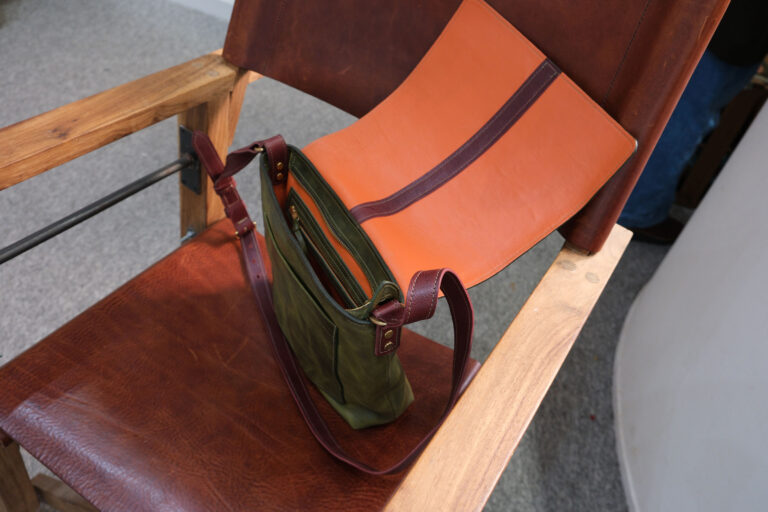
The most important construction feature in any leather bag is reinforcement at high-stress points. This means doubled or tripled leather at strap anchors, bar-tack stitching or box-X patterns where handles meet the body, rivets at load points, and corner patches or protective feet at the base.
Edge finishing matters just as much: raw leather edges fray and absorb moisture, while burnished, painted, or folded edges seal the fibre and resist wear. You can check these details in person without any specialist knowledge, run your thumb along the edges and look at where the handles attach.
Hardware worth trusting for years
Solid brass or stainless steel rivets, buckles, and zips outlast plated alternatives significantly. Check the rivet backs for evenness and clean finish. Plated hardware might look identical on day one, but the surface coating wears through with regular use, and what lies beneath is rarely as robust.
On-site workshops and why quality control looks different there
In a factory model, quality control is statistical: an acceptable defect rate is built into the production plan. A percentage of items will have flaws, and the system is designed around that expectation rather than against it. In an on-site artisan workshop, the person cutting the leather is often the same person stitching it and finishing the edges. At Two Fat Dogs, every bag passes through hands that are personally invested in the outcome. That’s not a romantic idea; it’s a functional difference in how quality is maintained. It shifts from a checkpoint at the end of a process to a standard woven into every stage of it.
The care routine that protects your investment over decades
Even the best-made bag needs attention over time. The good news is that the care routine for quality leather is simple, consistent, and genuinely effective. The bags that last forty or fifty years aren’t the result of intensive professional treatment; they’re the result of regular, light maintenance applied over time.
The simple habits that add years to a handcrafted leather bag
Wipe the bag down after use with a soft cloth to remove dust and surface moisture. Condition the leather every three to six months using a product suited to the leather type: for vegetable-tanned leather specifically, beeswax-based balms or products like Saphir Médaille d’Or Vacchetta balm or Bick 4 are consistently recommended because they nourish without over-softening or significantly darkening pale hides. Store the bag in a breathable dust bag, not a plastic cover, away from direct sunlight and heat. When the bag isn’t in use for an extended period, stuff it with tissue to help it hold its shape. These habits take minutes and compound significantly over years.
Why repairability is a feature, not a fallback
A full-grain leather bag with saddle-stitched seams can be resoled, restitched, and reconditioned. A worn edge can be refinished. A tired lining can be replaced. The bag can have a second life, and a third, because the underlying material and construction are sound enough to support intervention. A bonded leather bag that’s peeling, or a machine-stitched seam that has run its course, is effectively at the end of its usable life with no practical path back. Repairability is something worth factoring into a purchase decision, not something to think about only after something breaks.
What to look for when you’re ready to invest in a bag built to last
Everything covered in this article points toward the same practical conclusion: the factors that determine whether a leather bag lasts five years or fifty are knowable in advance. You don’t need specialist expertise to evaluate them; you need the right questions and a brand willing to answer them honestly.
The questions worth asking before you hand over your money
Before buying, ask: What grade of leather is this? Is it vegetable-tanned or chrome-tanned? Is the stitching saddle-stitched or machine-stitched? Where is the bag made, and by whom? Can it be repaired? Are the stress points reinforced? These aren’t demands; they’re the natural questions of someone who wants to buy once and buy well. A brand that answers them clearly and specifically is worth trusting. A brand that responds with vague language like “artisan-inspired” or “genuine leather” without supporting detail is telling you something important about what’s actually inside the bag.
Why provenance and on-site production signal genuine quality
A workshop willing to show you where things are made, name its leather source, and explain its construction decisions has nothing to hide. That transparency isn’t marketing; it’s evidence. At Two Fat Dogs, the bag you’re buying was cut, stitched, and finished in one place, by people who will stand behind what they made. That’s the on-site workshop model, and it’s the opposite of a supply chain optimised for cost with quality as an afterthought. When you can trace a bag from hide to finished product, you’re not just buying leather, you’re buying accountability.
The long view on a bag that lasts
Buying a handcrafted leather bag is a bet on an object that will outlast trends, improve with use, and potentially end up in someone else’s hands decades from now. Every material decision, every stitch, every reinforced stress point is a quiet vote for longevity over convenience.
When you understand what to look for, you move from hoping you’re making a good decision to knowing you are. This is precisely why handcrafted leather bags last longer: full-grain hides, saddle-stitching, vegetable tanning, reinforced construction, and consistent care aren’t premium features dressed up to justify a higher price tag. They’re the actual reasons a bag endures for a lifetime rather than eighteen months.
And when you find a workshop like Two Fat Dogs that builds every one of those decisions into the process by hand, you’re not paying more for a bag. Over time, you’re paying considerably less for something that genuinely lasts.